
If you are specifying steam for a pharmaceutical, biotech, or food-grade manufacturing facility, the distinction between pure steam and clean steam is not academic — it directly affects product safety, regulatory compliance, and capital equipment costs. Choosing the wrong steam grade can lead to failed audits, contaminated batches, or hundreds of thousands of dollars in unnecessary system upgrades.
This article breaks down the technical, regulatory, and cost differences between pure steam and clean steam so you can specify the right system for your application.
Pure steam is produced by evaporating feed water that meets or exceeds Water for Injection (WFI) or Purified Water (PW) quality standards. The resulting condensate must comply with the relevant pharmacopoeia — USP, EP, or JP — for WFI when tested. This means the condensate has extremely low levels of endotoxins (typically <0.25 EU/mL), total organic carbon (TOC), conductivity, and microbial contamination.
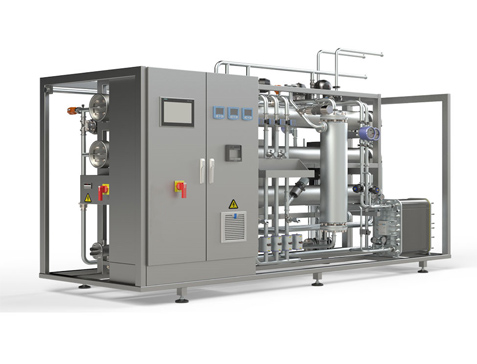
Pure steam is generated in dedicated pure steam generators, which use multi-effect or single-effect distillation to separate steam from impurities. The generator's design, materials of construction (typically 316L stainless steel with electropolished surfaces), and control systems are engineered to meet ASME BPE and cGMP requirements.
Key characteristics:
Condensate meets WFI specifications (USP/EP/JP)
Endotoxin levels <0.25 EU/mL
Produced from WFI or PW feed water
Used in direct product contact applications
Requires full validation and qualification (IQ/OQ/PQ)
Clean steam is a broader category. It refers to steam that is significantly cleaner than plant (industrial) steam but does not necessarily meet pharmacopoeia-grade purity when condensed. Clean steam can be generated from deionized (DI) or softened water rather than PW or WFI, and its condensate is not required to pass WFI testing.
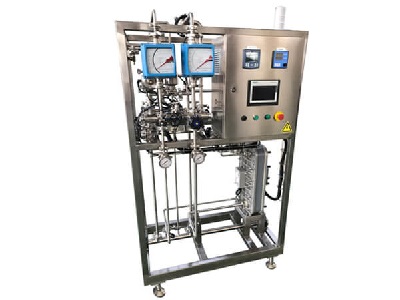
Clean steam is produced by clean steam generators — these can be electric, steam-to-steam, or gas-fired units. The key design principle is that no boiler chemicals (amines, phosphates, sulfites) come into contact with the steam, which is why clean steam generators use dedicated heat exchangers and corrosion-resistant materials.
Key characteristics:
Free of boiler treatment chemicals
Does not require WFI-grade feed water
Condensate does not need to meet pharmacopoeia WFI specs
Suitable for non-direct product contact sterilization
Lower capital and operating costs than pure steam systems
| Parameter | Pure Steam | Clean Steam |
|---|---|---|
| Feed water quality | WFI or Purified Water (PW) | Deionized or softened water |
| Condensate quality | Must meet WFI specifications (USP/EP/JP) | Chemical-free, but not pharmacopoeia-validated |
| Endotoxin limit | <0.25 EU/mL (pharmacopoeia requirement) | Not routinely tested to pharmacopoeia limits |
| Materials of construction | 316L SS, electropolished, ASME BPE compliant | 316L SS or 304 SS, smooth finish |
| Primary applications | SIP of product-contact equipment, aseptic processing, sterilization of product pathways | Humidification in cleanrooms, sterilization of non-product-contact equipment, cage washers, autoclave supply |
| Regulatory classification | GMP-critical utility; must be validated | Facility utility; less stringent validation requirements |
| Generation method | Distillation-based pure steam generator | Electric, steam-to-steam, or gas-fired clean steam generator |
| Capital cost | Higher (distillation-based, WFI-grade components) | Moderate (simpler design, lower-grade feed water) |
| Operating cost | Higher (WFI feed water, energy-intensive distillation) | Lower (DI water feed, less energy-intensive) |
| Validation requirement | Full IQ/OQ/PQ plus ongoing monitoring | Commissioning and basic qualification |
Pure steam is mandatory whenever steam or its condensate will directly contact a pharmaceutical product, product-contact surfaces, or any component that could affect product quality. Here are the most common scenarios:
Bioreactors, fermenters, filling lines, and product piping that cannot be removed for autoclaving require SIP with pure steam. The steam condenses on product-contact surfaces, and any impurities in that condensate could contaminate the next batch.
In aseptic manufacturing environments, pure steam is used to sterilize filling needles, product pathways, and sterilizing-grade filters. Regulatory agencies expect pure steam quality to be validated as part of the aseptic process.
Freeze dryers use pure steam for chamber sterilization between cycles. The steam contacts the product shelf surface and chamber interior — surfaces that will subsequently hold vials of injectable product.
Pure steam is used to inline-sterilize 0.22 µm filters that will be used to sterilize product solutions. Any impurity in the steam could compromise the filter's integrity.
Clean steam is appropriate for applications where sterility matters but the steam (or its condensate) will not directly contact product or product-contact surfaces:
HVAC systems supplying ISO 5–8 cleanrooms require humidification with chemical-free steam. Injecting plant steam containing amines would compromise air quality. Clean steam provides the necessary purity without the cost of pharmacopoeia-grade steam.
Autoclaves used for sterilizing non-product items — gowning, tools, environmental monitoring supplies — can operate on clean steam. Only autoclaves sterilizing product or product-contact parts require pure steam.
Washer-disinfectors and cage washers in animal research facilities or pharmaceutical support areas typically run on clean steam. The items being cleaned do not require pharmacopoeia-grade steam contact.
Clean steam is widely used in food-grade applications — dairy pasteurization equipment, brewing systems, and food packaging sterilization — where chemical-free steam is required but pharmacopoeia validation is not.
Some facilities attempt to use a pure steam generator to supply both pure and clean steam applications. This is technically feasible but has significant cost implications:
Over-specification cost: Running pure steam to cleanroom humidification or cage washers means paying for WFI-grade steam where it is not required. Over the lifetime of a facility, this can represent substantial unnecessary energy and water costs.
System segregation best practice: ISPE and ASME BPE guidelines recommend separating critical (pure steam) and non-critical (clean steam) distribution systems. This prevents cross-contamination and simplifies validation.
The more practical approach for most facilities is to install separate systems: a pure steam generator for GMP-critical applications and a clean steam generator for facility applications. Reputable clean steam generator manufacturers can design both systems and advise on the optimal configuration for your facility layout and process requirements.
Understanding the total cost of ownership helps justify the right investment:
| Cost Factor | Pure Steam System | Clean Steam System |
|---|---|---|
| Generator capital cost | 150,000–500,000+ depending on capacity | 50,000–200,000 depending on capacity |
| Feed water system | Requires WFI or PW generation system upstream | DI or softened water is sufficient |
| Installation | Higher — ASME BPE welding, orbital weld documentation, passivation | Moderate — standard pharmaceutical piping practices |
| Validation | Full IQ/OQ/PQ, ongoing sampling program, trend analysis | Commissioning and basic operational qualification |
| Annual operating cost | Higher — WFI feed water consumption, distillation energy | Lower — DI water, less energy-intensive generation |
| Maintenance | Higher — WFI-grade components, more stringent calibration | Moderate — standard industrial maintenance |
For a mid-scale pharmaceutical facility (500–2,000 kg/h steam demand), the all-in cost difference between a pure steam system and a clean steam system can range from200,000to1,000,000 when you factor in feed water infrastructure, validation, and five-year operating costs.
When selecting a steam generation system, work through this decision tree:
Will steam or its condensate contact product or product-contact surfaces?
Yes → Pure steam is required.
No → Continue to step 2.
Will the steam be used in a GMP-classified area?
Yes → Clean steam is the minimum; consider pure steam if validation simplification is desired.
No → Clean steam or plant steam may be sufficient.
Does the application require chemical-free steam?
Yes → At minimum, clean steam (no boiler chemicals).
No → Plant steam with appropriate treatment may be acceptable.
What is the feed water availability?
WFI/PW already available → Pure steam generation is straightforward.
Only DI/softened water available → Clean steam is more practical; adding WFI infrastructure for pure steam significantly increases cost.
The choice of equipment supplier matters as much as the choice of steam grade. An experienced clean steam generator supplier will:
Assess your process requirements and recommend the correct steam grade
Design the generator to meet applicable standards (ASME BPE, cGMP, EN 285)
Provide complete documentation packages for validation (material certificates, weld logs, functional specifications)
Offer commissioning support and training for your engineering team
Provide spare parts availability and long-term technical support
When evaluating clean steam generator manufacturers, look for a track record in your specific industry (pharmaceutical, biotech, food) and ask for references from similar-scale installations. The cheapest quote is rarely the most cost-effective choice over a 15–20 year equipment lifecycle.
No. Pure steam is a specific pharmacopoeia-grade steam whose condensate meets WFI specifications. Clean steam is a broader category of chemical-free steam that does not need to meet pharmacopoeia standards. All pure steam is clean steam, but not all clean steam is pure steam.
For product-contact SIP in GMP manufacturing, regulatory expectations require pure steam. Clean steam may be acceptable for SIP of non-product-contact equipment, but this should be justified in your risk assessment and approved by your quality unit.
Plant steam contains boiler treatment chemicals (amines for condensate line protection, oxygen scavengers, etc.). If plant steam contacts product or product-contact surfaces, these chemicals can contaminate the product and pose patient safety risks. Plant steam also carries rust, scale, and other particulates from the boiler and distribution system.
Clean steam systems require commissioning and basic operational qualification. Full GMP validation (IQ/OQ/PQ with ongoing monitoring) is expected for pure steam systems. Your specific validation scope should be determined through a risk assessment aligned with your regulatory obligations.
Pure steam generators must be fed with Water for Injection (WFI) or at minimum Purified Water (PW), as defined by USP, EP, or JP. Using lower-quality feed water risks producing steam that does not meet pharmacopoeia condensate specifications.
Determining the right steam grade and generation system for your facility requires a clear understanding of your process requirements, regulatory obligations, and total cost of ownership. Whether you need a pharmacopoeia-compliant pure steam system or a cost-effective clean steam solution, working with an experienced equipment partner ensures your specification is correct from the start.
Contact a qualified steam generation specialist to discuss your facility requirements, request a system proposal, or schedule a technical consultation.
 English
 日本語
日本語 한국어
한국어 français
 Svenska
 Türkçe
 Malay
Malay Deutsch
 русский