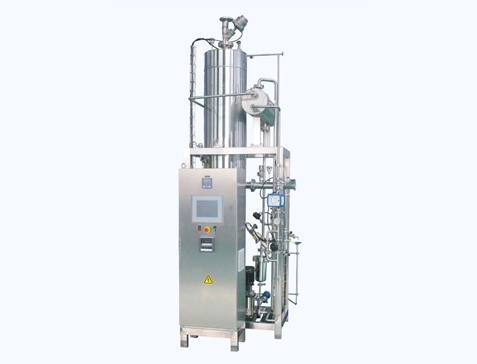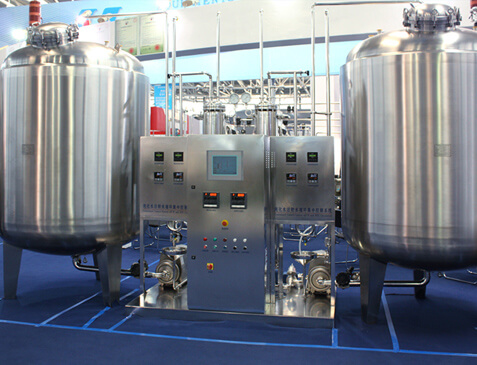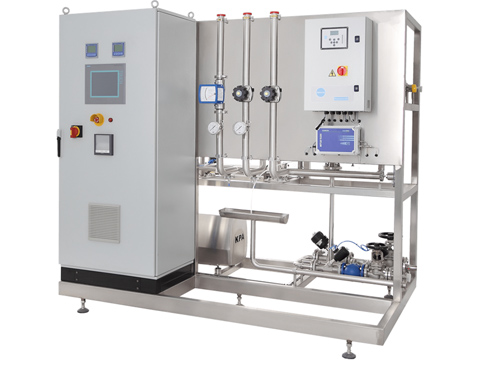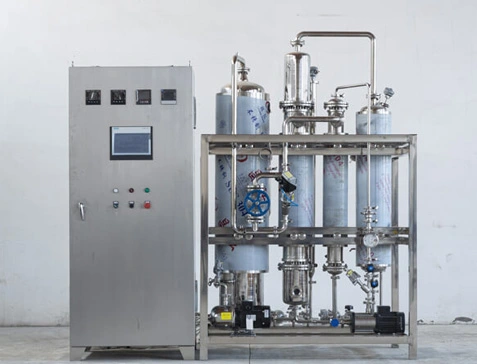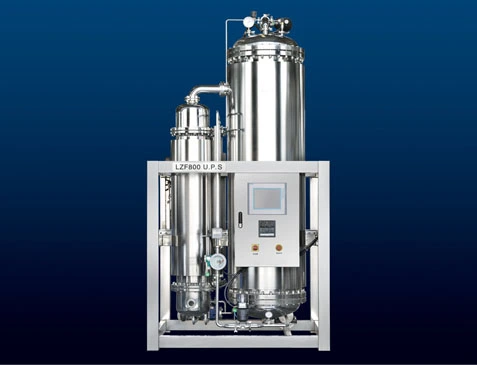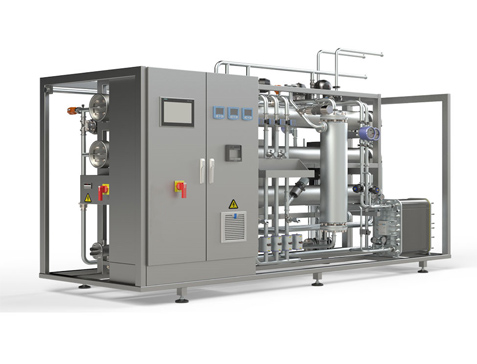
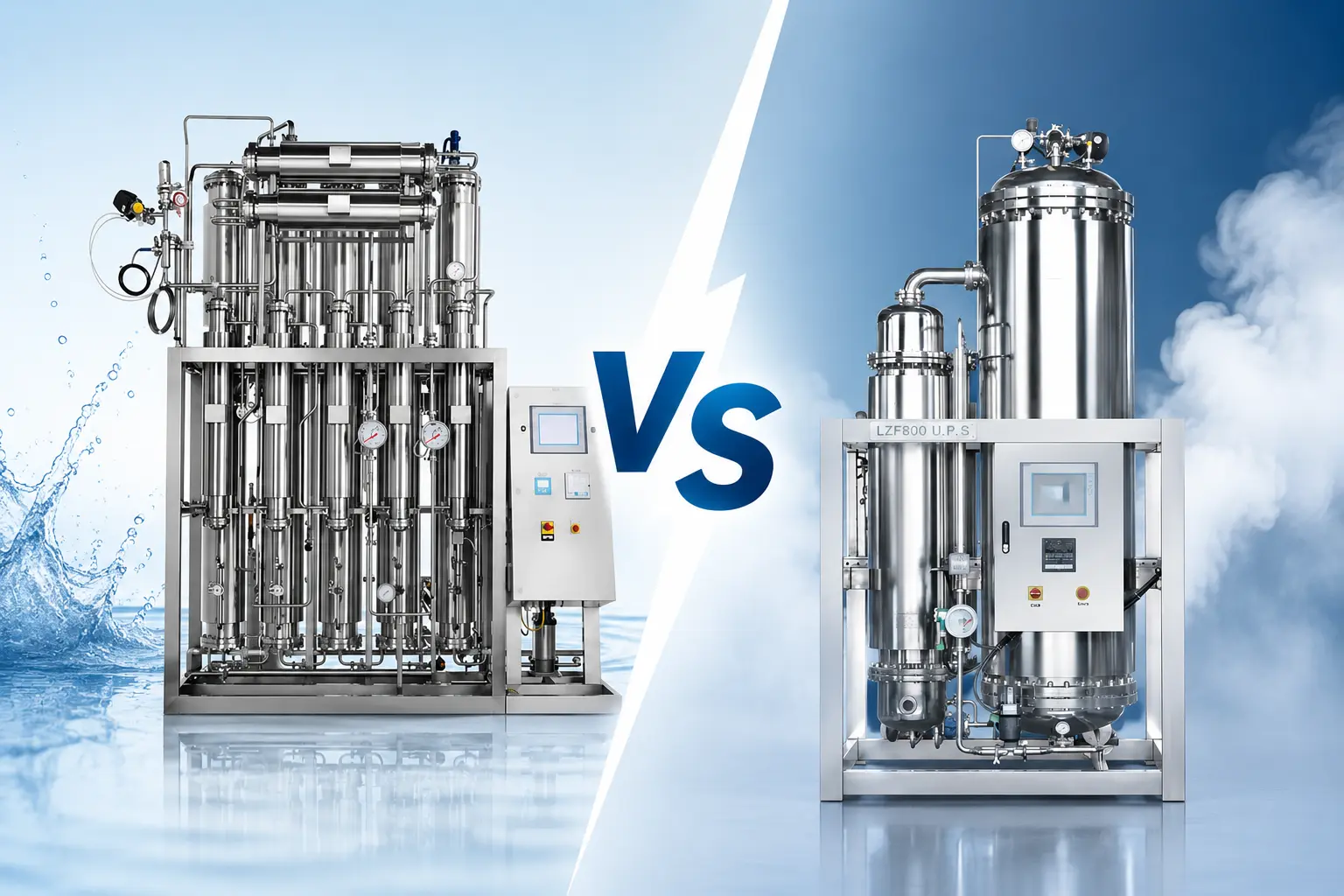
A multi effect water distiller is designed to produce Water for Injection (WFI) by distillation, ensuring the highest purity for pharmaceutical applications. A pure steam generator, on the other hand, produces sterile, pyrogen-free steam used primarily for sterilization processes such as SIP (Sterilization-in-Place).
While both systems are critical in pharmaceutical water systems and often work together, they serve fundamentally different purposes—one produces high-purity water, the other produces high-quality steam for sterilization.
A multi effect water distiller can function as a WFI generator, using multiple stages of evaporation and condensation to produce WFI efficiently.
Produces Water for Injection (WFI) compliant with pharmacopeia standards (USP, EP)
Uses multiple effects to reuse energy and improve efficiency
Removes endotoxins, pyrogens, and dissolved impurities
Typically integrated with WFI storage and distribution systems
Injectable drug manufacturing
Biopharmaceutical production
Vaccine and sterile product lines
A pure steam generator produces clean steam using purified water or WFI as feedwater. The steam is free of contaminants and suitable for direct contact sterilization.
Generates pyrogen-free, sterile steam
Designed for SIP/CIP systems
Uses high-quality feedwater (PW or WFI)
Meets EN 285 / HTM 2010 / FDA standards
Sterilization of tanks, pipelines, and equipment
Autoclaves and sterilizers
Cleanroom humidification (in some cases)
| Aspect | Multi Effect Water Distiller | Pure Steam Generator |
|---|---|---|
| Primary Output | Water for Injection (WFI) | Pure (clean) steam |
| Function | Water purification via distillation | Steam generation for sterilization |
| Feedwater | Purified water (PW) | PW or WFI |
| End Use | Drug formulation, rinsing | SIP, sterilization, autoclaves |
| Contaminant Removal | Removes endotoxins and impurities | Ensures steam purity, not water purification |
| System Role | Upstream water production | Downstream sterilization process |
In most pharmaceutical facilities, these two systems are not alternatives—they are complementary.
The multi effect water distiller produces WFI
The pure steam generator often uses WFI as feedwater
The steam is then used for sterilizing equipment and pipelines
This creates a closed-loop system ensuring both product purity and process sterility
The decision depends on your process requirements:
You need WFI for injectable products
Your process requires high-purity pharmaceutical-grade water
Compliance with USP/EP WFI standards is mandatory
You need sterilization capability (SIP/CIP)
Your facility uses autoclaves or sterilizers
You require pyrogen-free steam for direct contact
Pharmaceutical manufacturers require both systems to meet GMP requirements.
Thermal distillation remains the most reliable method for WFI production due to:
High endotoxin removal efficiency
Stable and validated process performance
Strong regulatory acceptance globally
Reduced microbial risk compared to membrane systems
This is why the multi effect water distiller is widely adopted in regulated pharmaceutical environments.
Must comply with USP, EP, JP standards for WFI
Requires IQ/OQ/PQ validation
Continuous monitoring of conductivity, TOC, and endotoxins
Must meet clean steam quality standards (EN 285, HTM 2010)
Steam must be non-pyrogenic and free of contaminants
Requires periodic steam quality testing
Multi effect water distillers are designed for energy recovery, reusing latent heat across multiple effects
Pure steam generators focus on rapid steam production, often with less emphasis on energy reuse
As a result, distillers are generally more energy-efficient for water production, while steam generators prioritize process responsiveness
No. A pure steam generator produces sterile steam, not liquid water. WFI must be produced by systems such as a multi effect water distiller or vapor compression distiller.
Not directly. While distillation involves steam internally, the system is designed to condense it into WFI, not supply clean steam for sterilization.
Not always. Some systems use purified water (PW), but using WFI ensures the highest level of purity, especially in critical pharmaceutical applications.
Clean steam: Produced from purified water/WFI, free of contaminants
Plant steam: Industrial steam, may contain chemicals and is not suitable for direct contact
Yes, in most GMP-compliant facilities:
WFI is required for product formulation and rinsing
Pure steam is required for sterilization processes
A multi effect water distiller and a pure steam generator serve distinct but interconnected roles in pharmaceutical manufacturing. One ensures the availability of ultra-pure water for product contact, while the other guarantees sterility of equipment and processes.
For facilities operating under strict GMP requirements, integrating both systems is not optional—it is essential for maintaining product quality, regulatory compliance, and operational reliability.
 English
 日本語
日本語 한국어
한국어 français
 Svenska
 Türkçe
 Malay
Malay Deutsch
 русский