In pharmaceutical, healthcare, food, and life science industries, a Purified Water (PW) storage tank is far more than just a container. It is a critical component that determines whether your purified water system remains compliant, microbiologically controlled, and operationally efficient. A well-designed PW tank can reduce contamination risks, improve system stability, and help your plant pass GMP inspections with confidence.
So, what exactly defines a "good" PW storage tank? In this article, we’ll explore key design considerations from four perspectives: regulatory expectations, structural configuration, microbial control, and GMP validation.
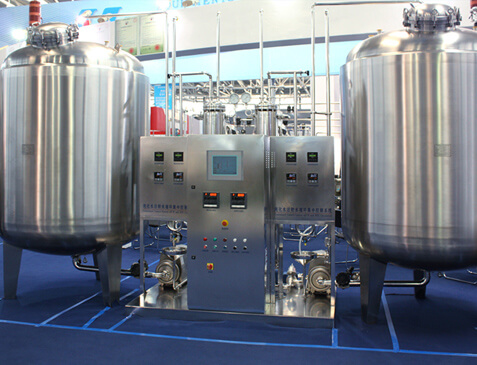
PW tanks serve more than just a storage function. In a properly engineered water system, the tank acts as a:
Buffer to stabilize pressure and flow
Dynamic reservoir to ensure circulation and suppress microbial growth
Control point for temperature, level, and sanitization monitoring
Component of a validated GMP system that supports automated CIP/SIP
While various industries use PW storage tank, the pharmaceutical sector sets the highest design and compliance standards, especially under EU-GMP, cGMP, and PIC/S frameworks.
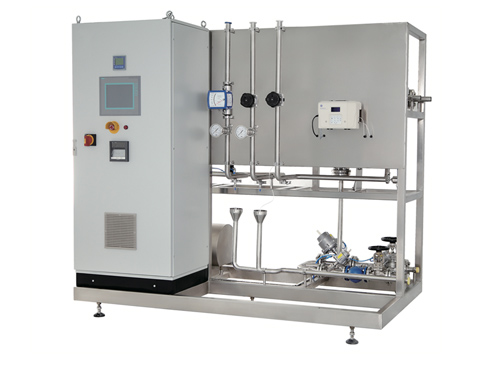
Here are the most important elements that define a high-performance, GMP-compliant PW storage tank:
| Design Feature | Recommended Configuration Description |
|---|---|
| Material | SUS316L stainless steel; inner surface polished to Ra ≤ 0.4μm to prevent dead legs |
| Volume | Sized based on daily consumption + buffer (~20–30% of 24h demand is typical) |
| Tank Structure | Vertical cylindrical body; elliptical top head and conical bottom for full drainage |
| Inlet/Outlet Design | Bottom outlet + top spray inlet for smooth laminar flow |
| Instrumentation | Standard ports for CIP spray ball, level transmitter, thermometer, pressure gauge, vent filter |
| Insulation | PU foam or SS cladding with electric heating based on environment |
| Support Structure | Triangular legs with vibration-proof footings for stability and hygiene |
| Vent Filter | 0.22μm hydrophobic sterilizing filter with steam-in-place capability |
| Automation & Control | Integrated with PLC system, enables real-time monitoring and interlock control |
Purified pharmaceutical Water systems should never have stagnant sections. A “live” system with dynamic recirculation helps prevent microbial proliferation.
Water exits from the tank’s bottom outlet
Passes through a recirculation pump, UV sterilizer, and polishing filter
Returns via top spray inlet, creating full circulation
To ensure hygiene and velocity:
Flow speed is maintained at 1.5–2.0 m/s (fully filled pipe system)
Temperature is kept slightly above ambient (usually ambient +5–10°C)
No dead legs or low-flow zones are allowed
Biocell’s PW systems integrate automated control features such as scheduled recirculation, UV sterilization, alarm prompts, and continuous monitoring to maintain a safe and stable system with minimal operator intervention.
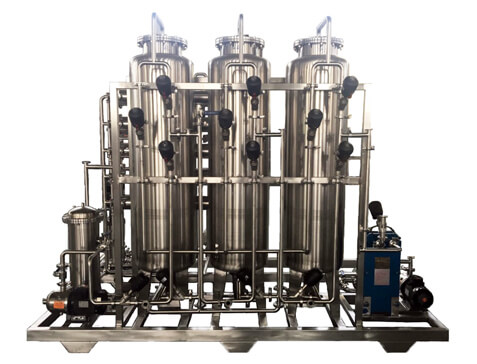
A well-designed PW tank must support full GMP validation. At Biocell, we provide comprehensive documentation and testing services, including:
Material Certification (MOC), weld inspection reports
Surface finish documentation (Ra)
Factory Acceptance Testing (FAT) and Site Acceptance Testing (SAT)
IQ/OQ validation packages covering level, temperature, pressure sensors
Consistent system logic with upstream water purification and downstream loops
We understand that documentation matters just as much as engineering, especially when your facility is preparing for FDA, EMA, or NMPA audits.
As a specialized manufacturer of pharmaceutical-grade water systems, Biocell offers more than just tanks—we deliver integrated, validated solutions.
Fully automatic orbital welding with mirror-polished SUS316L internals
Modular design suitable for both new builds and retrofits
Real-time monitoring for level, pressure, and temperature
Integrated accessories (UV, pumps, vent filters, CIP, etc.)
Full bilingual IQ/OQ documentation and technical support
We serve customers across:
Pharmaceutical factories
Hospitals and preparation labs
Food and beverage producers
Medical device manufacturers
Chemical plants and research institutions
Water system EPC contractors and distributors
Often overlooked, the PW tank plays a crucial role in system performance. Its design directly impacts microbial control, compliance readiness, and operational efficiency.
A poorly designed tank becomes a contamination risk. A well-engineered tank, however, acts as the “heart” of the water system—circulating, balancing, and protecting your entire production process.
This is the first one.
 English
 日本語
日本語 한국어
한국어 français
 Svenska
 Türkçe
 Malay
Malay Deutsch
 русский