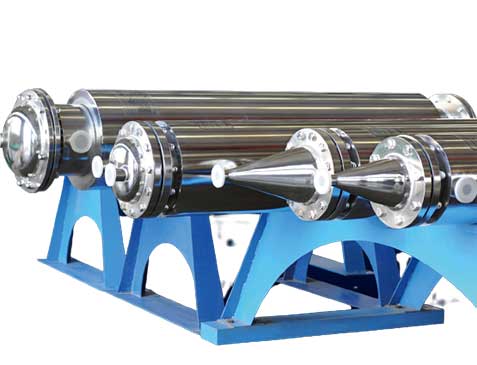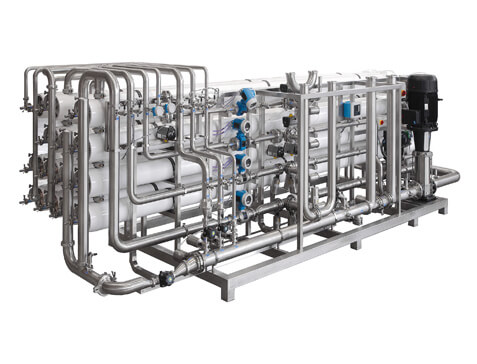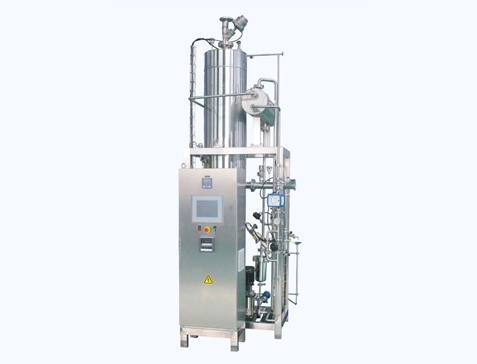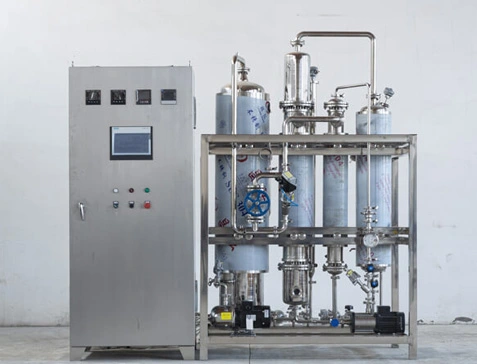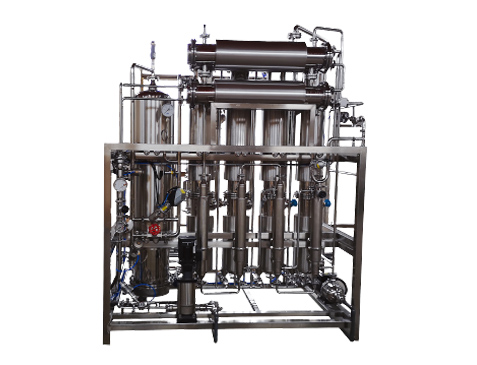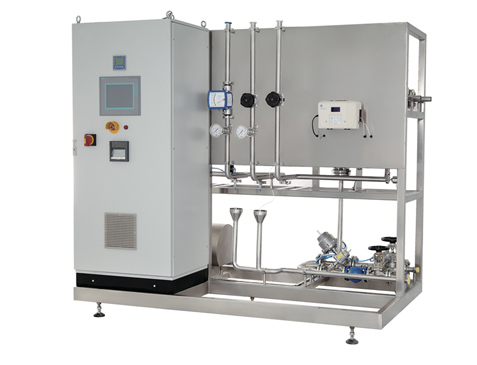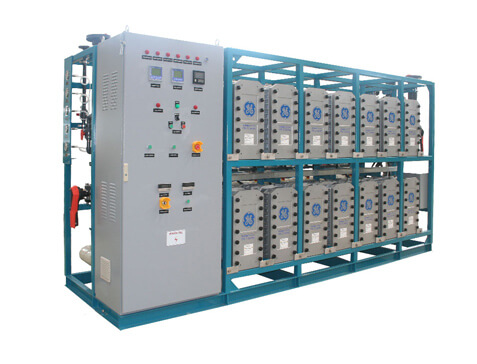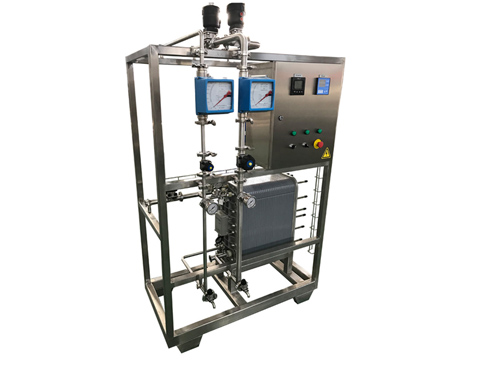
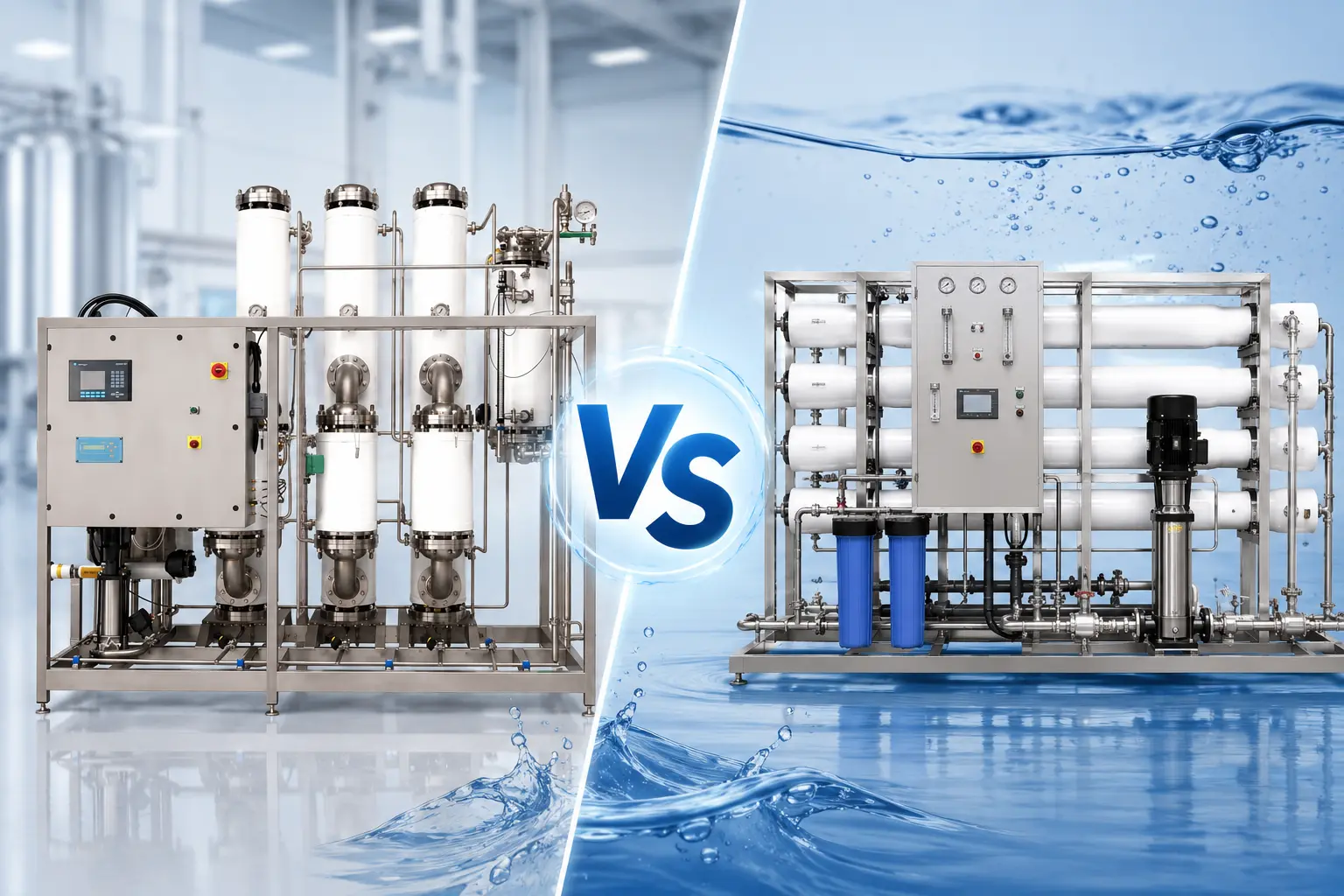
A purified water skid is a fully integrated, modular system designed to produce, store, and distribute pharmaceutical-grade purified water (PW) in compliance with GMP standards. A reverse osmosis (RO) system is a core treatment technology within that skid, responsible for removing dissolved salts, organics, and microorganisms through membrane filtration.
In practice, an RO system is only one part of the overall process, while a purified water skid represents the complete engineered solution ready for pharmaceutical production environments.
A purified water skid is a pre-assembled, skid-mounted system that integrates multiple treatment technologies into a single, automated unit for producing purified water.
Fully integrated system (RO, EDI, UV, filtration, control systems)
Designed for GMP-compliant pharmaceutical applications
Includes instrumentation, automation, and validation-ready design
Often combined with storage and distribution loops
Pretreatment (sand filter, carbon filter, softener)
Reverse osmosis (RO)
Electrodeionization (EDI) or mixed bed polishing
UV sterilization
Final filtration (0.2 μm)
A reverse osmosis system uses semi-permeable membranes to remove dissolved solids, bacteria, and organic contaminants from water.
High rejection rate for ions, salts, and microorganisms
Compact and widely used in industrial water treatment
Can be used as a standalone unit or part of a larger system
Requires pretreatment to protect membranes
Industrial process water
Food and beverage production
Pretreatment for pharmaceutical purified water systems
| Aspect | Purified Water Skid | RO System |
|---|---|---|
| Definition | Complete water purification system | Single treatment technology |
| Function | Produces pharmaceutical-grade PW | Removes dissolved impurities via membrane |
| Scope | End-to-end solution (treatment + control) | One step in the process |
| Compliance | Designed for GMP validation | Not inherently GMP-compliant alone |
| Integration | Includes multiple technologies | Typically standalone or modular |
| Output Quality | Meets USP/EP purified water standards | Requires polishing (EDI/UV) to meet pharma standards |
A purified water skid typically uses RO as the primary purification stage, followed by additional polishing and control steps:
Pretreatment removes chlorine, hardness, and particulates
RO membranes remove dissolved salts and most contaminants
EDI or mixed bed ensures ultra-low conductivity
UV and filtration control microbial contamination
This layered design ensures consistent compliance with pharmaceutical water standards.
You operate in pharmaceutical, biotech, or cosmetics manufacturing
You require USP/EP purified water compliance
You need a validated, turnkey system with automation and documentation
You need general industrial water purification
You are building a custom system in stages
You require pretreatment before further polishing technologies
In regulated industries, selecting only an RO system is rarely sufficient. A purified water skid is typically required to meet compliance and operational reliability standards.
Reverse osmosis is highly effective, but it has limitations in pharmaceutical environments:
Cannot fully guarantee low TOC and endotoxin control
Membrane performance can fluctuate with feedwater quality
Lacks integrated sanitization and validation features
Does not include continuous monitoring systems
For these reasons, RO must be combined with technologies like EDI, UV, and sanitary piping design within a purified water skid.
Pharmaceutical purified water systems must comply with:
USP (United States Pharmacopeia)
EP (European Pharmacopoeia)
GMP guidelines (FDA, WHO)
Key requirements include:
Continuous monitoring of conductivity and TOC
Microbial control within defined limits
Full IQ/OQ/PQ validation
санитарy design (316L stainless steel, orbital welding, dead-leg control)
A purified water skid is engineered to meet these requirements from the outset.
Compared to site-built systems, a skid-mounted solution offers:
Factory acceptance testing (FAT) before delivery
Reduced installation time on site
Pre-configured automation and control systems
Easier validation and documentation
This significantly lowers project risk and accelerates commissioning timelines.
No. A purified water skid includes RO as one of several treatment steps. It is a complete system designed for pharmaceutical-grade water production.
Not on its own. RO water typically requires further polishing (EDI, UV, filtration) to meet USP/EP purified water requirements.
EDI (Electrodeionization) removes residual ions after RO, ensuring stable low conductivity without chemical regeneration.
With proper maintenance, systems can operate reliably for 10–15 years or more, depending on usage and component quality.
Pharmaceutical manufacturing
Biotechnology
Cosmetics production
Food and beverage (high-purity applications)
A purified water skid and an RO system are not competing technologies—they exist at different levels of system design. RO provides the core filtration capability, while the purified water skid integrates multiple technologies into a validated, GMP-compliant solution.
For pharmaceutical and other regulated industries, relying solely on RO is insufficient. A properly designed purified water skid ensures consistent water quality, regulatory compliance, and long-term operational stability, making it the preferred choice for mission-critical applications.
 English
 日本語
日本語 한국어
한국어 français
 Svenska
 Türkçe
 Malay
Malay Deutsch
 русский