.webp)
Water for Injection (WFI) system validation is one of the most scrutinized activities in pharmaceutical manufacturing. WFI is classified as a GMP-critical utility — it contacts drug products directly, and any failure in water quality can compromise patient safety. Regulatory agencies including FDA, EMA, and WHO expect manufacturers to demonstrate through documented evidence that their WFI system is designed correctly, installed properly, operates within specifications, and performs consistently over time.
This guide provides a practical, phase-by-phase walkthrough of WFI system validation, from planning through ongoing monitoring, with actionable guidance for each stage.
Before diving into execution, it is worth understanding what regulators explicitly require:
EU GMP Annex 1 (2022 revision): Requires that water systems used in sterile manufacturing be qualified and monitored. WFI systems must be validated to demonstrate consistent production of water meeting pharmacopoeia specifications.
FDA Guide to Inspections of High Purity Water Systems: FDA investigators evaluate the design, qualification, and ongoing monitoring of WFI systems during facility inspections. Deficiencies in validation are among the most commonly cited observations.
WHO Technical Report Series No. 1033, Annex 3: Provides detailed guidance on water system design, qualification, and monitoring for WHO-prequalified manufacturers.
ISPE Baseline Guide Vol. 4 (Water and Steam Systems): The industry-standard reference for water system design and qualification, covering DQ through PQ with detailed technical guidance.
USP <1231> Water for Pharmaceutical Purposes: Provides guidance on water system design, validation, and testing, including recommended sampling frequencies and acceptance criteria.
The URS is the foundation document. It defines what the WFI system must achieve from the user's perspective:
Capacity requirements: WFI production rate (L/h), peak demand, storage volume, number and type of use points
Quality specifications: USP, EP, or JP WFI monograph compliance — conductivity, TOC, endotoxin, microbial limits, nitrates, heavy metals (as applicable)
Operational requirements: Continuous or batch operation, hot or ambient distribution, automation level, integration with building management systems
Regulatory requirements: Applicable GMP standards, pharmacopoeia, and any customer-specific requirements
Environmental requirements: Ambient temperature, humidity, seismic zone (if applicable), and utility availability (steam, electricity, cooling water)
The VMP defines the scope, approach, responsibilities, and schedule for the entire validation effort. For a WFI system, the VMP should address:
System boundary definition (what is included in the validation scope — generation, storage, distribution, all use points)
Validation approach (prospective, concurrent, or retrospective — prospective is standard for new systems)
Acceptance criteria aligned with pharmacopoeia specifications
Roles and responsibilities (Validation, Quality, Engineering, equipment supplier)
Schedule and milestone dependencies
Deviation management process
Change control procedure for the validation period
DQ confirms that the proposed WFI system design will meet all URS requirements. It is performed before manufacturing begins.
Process Design Verification:
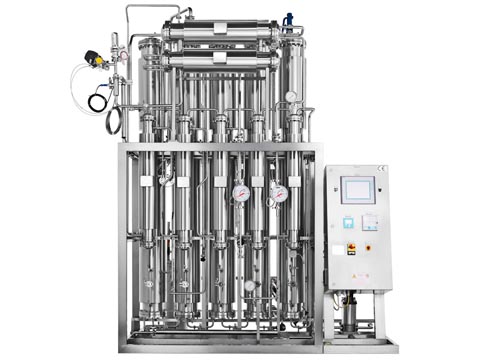
Confirm the wfi generator capacity meets or exceeds the maximum calculated demand with an appropriate safety margin (typically 10–20%)
Verify the distillation or membrane process selected is appropriate for the feed water quality and required output specifications
Confirm the storage tank volume is adequate for peak demand and turnover requirements
Verify the distribution loop design (single loop, sub-loops, hot or ambient) meets operational requirements
Material and Component Specifications:
All product-contact surfaces: 316L stainless steel (or equivalent) per ASME BPE
Surface finish: Ra ≤ 0.8 µm (electropolished) for all wetted surfaces
Gaskets and seals: PTFE, EPDM, or other approved materials — verify extractables data is available
Instruments: Sanitary design, Tri-Clamp connections, 316L SS bodies where wetted
P&ID and Layout Review:
Verify all instruments, sampling points, drain points, and isolation valves are correctly located
Confirm dead-leg ratios (L/D ≤ 6 per ASME BPE for all product-contact branch connections)
Verify piping slope for complete drainability (minimum 1% slope toward drain points)
Confirm adequate sampling points: at generation outlet, storage tank, distribution loop supply, distribution loop return, and each point of use (or a representative rotating schedule)
Control System Design:
PLC/SCADA system with 21 CFR Part 11 compliance: electronic signatures, audit trails, access control
Continuous monitoring of critical parameters: conductivity, TOC (online), temperature, pressure, flow, level
Data historian with trend capability
Alarm management with escalation logic
Remote monitoring capability (increasingly expected in modern facilities)
Insufficient online analytical capability (relying solely on offline laboratory testing)
Missing sampling points at worst-case locations (end of distribution loop, lowest-flow use points)
No consideration for future expansion capacity
Control system lacking audit trail or electronic signature capability
Feed water quality specifications not aligned with the generation technology requirements
IQ verifies that the WFI system has been installed exactly as specified in the approved design documents.
Documentation Verification:
As-built P&IDs and isometric drawings match approved design
Material certificates (EN 10204 3.1) for all product-contact components — pipes, fittings, valves, vessels
Weld documentation: weld maps, weld logs, welder qualifications (WPQ), welding procedure specifications (WPS), orbital weld parameter printouts
Passivation and pickling certificates
Instrument datasheets and calibration certificates (NIST-traceable)
Pressure test certificates for all piping and vessels
Component verification against the approved bill of materials
Physical Installation Verification:
All components installed per P&ID — correct type, size, orientation, and location
Piping slope verified with inclinometer at defined intervals
Dead-leg measurements at all branch connections (L/D ratio verified)
All drain points accessible and properly routed
Steam traps (if applicable) correctly installed with proper orientation
Valves installed with correct flow direction
Instruments accessible for calibration and maintenance
Pipe supports per design — proper spacing, no stress on connections
Labeling and tagging complete and per naming convention
Utility Connections:
Plant steam (if distillation-based wfi generation systems): pressure, temperature, and quality verified
Electrical supply: voltage, phase, amperage, grounding verified
Feed water: quality verified against URS specifications
Cooling water (if applicable): pressure, temperature, and quality verified
Compressed air: oil-free, dry, and at specified pressure
Drain connections: proper routing, air gaps, and compliance with local plumbing codes
Control System Installation:
All I/O verified against I/O list
Network connectivity confirmed (PLC, HMI, SCADA, data historian)
Cable routing per design — separation of power and signal cables
Proper grounding and shielding verified
OQ demonstrates that the WFI system operates within its specified parameters throughout its operational range.
Functional Testing — Generation:
WFI generator start-up sequence verified (automatic and manual modes)
Steam pressure/temperature control at setpoint (e.g., for distillation: column pressure, evaporator temperature)
Feed water flow control and level management
Blowdown and venting sequences
Capacity verification — confirm WFI output meets rated capacity under design conditions
Turndown verification — confirm stable operation at minimum demand
Functional Testing — Distribution:
Distribution pump operation verified — flow rates at design conditions
Temperature control verified (hot loop: typically >70°C; ambient loop: as specified)
Pressure regulation at each use point
Return loop flow and temperature verified
UV sanitizer operation verified (if applicable — common in ambient distribution)
Heat exchanger performance verified (heating to >70°C for sanitization)
Alarm and Interlock Testing:
High/low conductivity alarm at generation outlet and distribution loop
High/low TOC alarm (if online monitoring installed)
High endotoxin alarm (if online monitoring installed)
Storage tank high/low level alarms
Distribution pump failure alarm
Temperature out-of-range alarm (hot loop <65°C triggers alarm; <60°C triggers action)
Feed water quality alarm (conductivity, hardness, chlorine)
Loss of utility alarms (steam, electricity, compressed air)
Safety relief valve operation verified on storage tank and generator
WFI Quality Testing — OQ Phase:
Sample WFI at generation outlet, storage tank, distribution supply, distribution return, and all points of use
Test for all pharmacopoeia parameters:
| Parameter | USP WFI Limit | EP WFI Limit |
|---|---|---|
| Conductivity | Per stage testing table | ≤ 1.1 µS/cm at 20°C |
| TOC | ≤ 50 ppb | ≤ 50 ppb |
| Endotoxin | ≤ 0.25 EU/mL | ≤ 0.25 EU/mL |
| Microbial (bioburden) | ≤ 10 CFU/100 mL | ≤ 10 CFU/100 mL |
| Nitrates | ≤ 0.2 ppm | N/A |
| Heavy metals | Per USP | Per EP |
| pH (if applicable) | 5.0–7.0 | 5.0–7.0 |
| Appearance | Clear, colorless | Clear, colorless |
Control System Verification:
All setpoints, alarms, and interlocks verified with actual simulated or real process conditions
Data logging confirmed — verify data historian captures all critical parameters at defined intervals
Trend display and report generation tested
User access levels tested (operator, supervisor, administrator)
Audit trail verified — confirm all changes to setpoints, alarms, and configurations are logged with user ID and timestamp
HMI screen navigation, alarm acknowledgment, and password management verified
PQ demonstrates consistent WFI quality over an extended period under routine operating conditions. This is the most time-intensive phase and the one most closely examined during regulatory inspections.
Duration: 2–4 weeks minimum (30 days is common industry practice)
Sampling Plan:
Generation outlet: Daily
Storage tank: Daily
Distribution loop supply: Daily
Distribution loop return: Daily
Each point of use: Daily (or every operating day)
Test Parameters at Each Sampling Point:
Conductivity (online and offline verification)
TOC (online and offline verification)
Endotoxin: LAL (Limulus Amebocyte Lysate) testing — kinetic turbidimetric or chromogenic method
Microbial enumeration: Membrane filtration or pour plate method (R2A agar, minimum 5-day incubation at 30–35°C)
Appearance and pH (if specified)
Acceptance Criteria:
All results must comply with the applicable pharmacopoeia specifications
No excursion or out-of-specification (OOS) results
Trend data should show stable, consistent performance with no adverse trends
Duration: 4–8 weeks
Sampling Plan:
Generation and distribution key points: 3 times per week
Points of use: Rotating schedule, each point tested at least once per week
Test Parameters:
Same full panel as Phase 1
Purpose:
Confirm that Phase 1 results were not anomalous
Observe system behavior under varying production demands (weekdays, weekends, production shutdowns)
Begin establishing statistical baseline for ongoing monitoring
Duration: Indefinite — becomes the routine monitoring program
Sampling Plan:
Online monitoring: Continuous for conductivity, TOC, temperature, pressure
Generation outlet: Weekly offline verification
Distribution loop return: Weekly offline verification
Points of use: Rotating schedule — each point tested at least monthly for full panel; weekly for conductivity/TOC
Test Parameters:
Conductivity and TOC at every sampling event
Endotoxin: Monthly at generation and return; quarterly at all use points (or per your risk assessment)
Microbial: Monthly at generation and return; quarterly at all use points
Establish two-tier limits that trigger appropriate responses:
| Parameter | Alert Limit | Action Limit |
|---|---|---|
| Conductivity | Internal specification (e.g., 80% of pharmacopoeia limit) | Pharmacopoeia limit |
| TOC | Internal specification (e.g., 80% of pharmacopoeia limit) | Pharmacopoeia limit |
| Endotoxin | Internal specification (e.g., 0.15 EU/mL) | Pharmacopoeia limit (0.25 EU/mL) |
| Microbial | Internal specification (e.g., 5 CFU/100 mL) | Pharmacopoeia limit (10 CFU/100 mL) |
| Temperature (hot loop) | <70°C alert | <65°C action |
Alert limit excursions require investigation and documentation. Action limit excursions require full deviation investigation, impact assessment, and CAPA.
Monthly trend reports should include:
All online and offline analytical data plotted over time
Comparison against alert and action limits
Identification of any upward trends (even within specification) that may indicate developing issues
Correlation with operational events (maintenance, sanitization, production changes, seasonal feed water variations)
Statistical trend analysis (e.g., control charts with calculated control limits) is increasingly expected by regulators. A water for injection plant that simply collects data without analyzing trends is not meeting current GMP expectations.
Thermal Sanitization (Hot Distribution):
Hot WFI loops (>70°C) are self-sanitizing — continuous thermal control inhibits microbial growth
Periodic super-sanitization (>80°C for 2+ hours) may be scheduled monthly or quarterly
Chemical Sanitization (Ambient Distribution):
Ambient WFI loops require periodic sanitization with approved agents (peracetic acid, hydrogen peroxide, or ozone)
Frequency is determined by trend data — typically every 2–4 weeks
Post-sanitization flushing must be validated to confirm complete chemical removal
Preventive Maintenance Integration:
Instrument calibration per defined schedule (typically quarterly for critical instruments)
Steam trap inspection (distillation systems)
RO/UF membrane integrity testing (membrane-based systems)
Heat exchanger inspection for leaks (critical for maintaining WFI quality)
Pump seal inspection and replacement
Storage tank interior inspection during planned shutdowns
Any modification to the WFI system requires change control assessment:
| Change Type | Example | Validation Impact |
|---|---|---|
| Like-for-like replacement | Swapping a failed instrument with identical model | Document in change control; calibration verification only |
| Component upgrade | Replacing a conductivity sensor with a newer model from same manufacturer | Risk assessment + OQ verification of new instrument |
| System modification | Adding a new use point or extending distribution piping | Risk assessment + partial requalification (IQ for new installation, OQ for impacted parameters, PQ extension) |
| Setpoint change | Adjusting storage tank temperature from 80°C to 75°C | Risk assessment + OQ verification at new setpoint + PQ at new condition |
| Process change | Switching from distillation to membrane-based WFI production | Full revalidation required |
Conduct an annual comprehensive review of the WFI system, including:
Trend analysis summary for the full year
Deviation and OOS history
Corrective and preventive action effectiveness
Maintenance records and open work orders
Calibration status and any overdue items
Change control log review
Comparison of actual performance against validation baseline
Recommendations for system improvements or validation updates
Insufficient sampling points: If you cannot demonstrate WFI quality at every critical location, your validation is incomplete. This is one of the most common FDA 483 observations.
Skipping DQ: Design changes after installation are exponentially more expensive than getting the design right before manufacturing. A well-executed DQ prevents costly rework.
Rushing PQ to meet production deadlines: PQ requires sufficient data points to demonstrate statistical confidence. Cutting corners here creates regulatory risk that can surface during any inspection for years to come.
Weak online monitoring capability: Relying solely on offline laboratory testing misses real-time quality events. Modern wfi generation systems should include continuous online conductivity, TOC, and temperature monitoring as a minimum.
No trend analysis program: Collecting data without analyzing trends means you will miss gradual degradation until it becomes an excursion. Proactive trend analysis prevents quality events.
Ignoring feed water variability: Feed water quality changes seasonally and can impact WFI generation performance. Your validation should account for seasonal variation, particularly if your feed water is municipal supply.
The validation effort is significantly influenced by the quality and completeness of the equipment you install. When evaluating wfi generator suppliers and water for injection machine manufacturers, consider:
Documentation completeness: Does the supplier provide comprehensive material certificates, weld documentation, IO lists, and functional specifications as standard?
FAT/SAT support: Can the supplier support Factory Acceptance Testing and on-site commissioning?
Validation protocol templates: Does the supplier offer standardized IQ/OQ protocols that can be customized for your facility?
Online monitoring capability: Does the system include integrated online analytical instruments (conductivity, TOC, temperature) with data historian integration?
Regulatory experience: Has the supplier's equipment been successfully qualified in facilities inspected by FDA, EMA, or WHO?
Long-term support: Is the supplier committed to spare parts availability, remote diagnostics, and technical support over the 15–20 year equipment lifecycle?
A water for injection generation system that is designed for validation — with comprehensive documentation, integrated monitoring, and supplier support — reduces the validation timeline and cost by 30–50% compared to retrofitting validation requirements onto a generic system.
Plan for 12–18 months from DQ through PQ completion for a new WFI system. DQ: 4–8 weeks. IQ: 2–4 weeks. OQ: 4–8 weeks. PQ Phases 1–3: 6–12 months. The timeline can be compressed with experienced project management and a validation-ready equipment supplier.
WFI validation is a subset of water system validation. A complete pharmaceutical water system includes Purified Water (PW) generation, distribution, and WFI generation and distribution. WFI validation focuses specifically on the WFI generation and distribution components, which have stricter specifications (particularly for endotoxin and microbial limits).
Yes. Pre-treatment (softening, carbon filtration, RO, EDI) directly impacts WFI quality and must be included in the validation scope. Pre-treatment validation is typically less intensive than WFI validation but must demonstrate that the pre-treatment chain consistently produces feed water that meets the WFI generator's inlet specifications.
There is no fixed revalidation interval in regulations. Instead, revalidation is triggered by changes (per change control) and supported by the ongoing monitoring program. A formal periodic review (annual) assesses whether the system remains in a validated state. Many companies perform a formal requalification summary every 3–5 years.
Any out-of-specification (OOS) result triggers a deviation investigation per your SOP. The investigation determines root cause, assesses impact on product manufactured using that WFI, and implements CAPA. Product manufactured during the affected period may need to be quarantined and evaluated for impact. The investigation and its conclusions must be documented and available for regulatory inspection.
WFI system validation is a substantial but manageable undertaking when approached methodically. The key to success is starting with a well-designed system, working with an experienced equipment partner, and executing each validation phase with discipline and thorough documentation.
For technical consultation on WFI system validation, customized qualification protocols, or to request a proposal for a new WFI generation system, contact a qualified pharmaceutical water systems specialist.
 English
 日本語
日本語 한국어
한국어 français
 Svenska
 Türkçe
 Malay
Malay Deutsch
 русский